Preclinical Animal Study Protocols, Built for FDA Q‑Submissions
We write in vivo study protocols for orthopedic and musculoskeletal devices, ready for FDA pre-submission review. Model selection, endpoints and statistics in one defensible plan.
Animal Study Protocols for Q-Subs
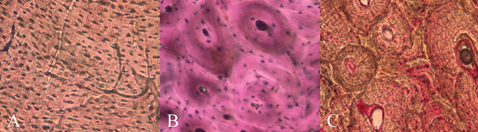
Representative histology of ovine cortical bone (A–C). From Gadomski BC, PhD dissertation, Colorado State University, 2015.
Writing preclinical animal study protocols is our core work. We draft the protocol you bring to FDA in a pre-submission, so model, sample size, controls and endpoints are agreed on before the study starts.
Built for Orthopedic Devices
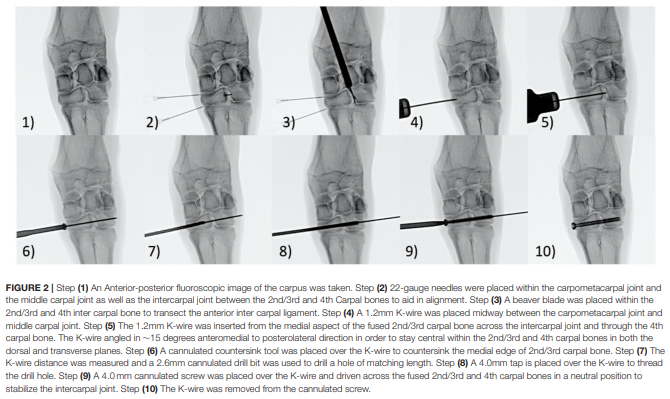
Fluoroscopy-guided screw placement in an ovine carpal model. Adapted from Gadomski et al., Frontiers in Veterinary Science, 2022 (CC BY 4.0).
We focus on spine fusion, fracture and bone defect repair, rotator cuff and soft tissue, and cartilage devices. Each protocol pairs the right large or small animal model with the ex vivo endpoints FDA expects for that indication: histology and histomorphometry, microCT, radiographic scoring, and biomechanical testing. When the study is done, we analyze the data and help answer any preclinical deficiencies FDA raises.
Regulatory Strategy
We also support the regulatory side of preclinical work: the preclinical content of your pre-submission, review of study data before it goes to FDA, and responses to preclinical deficiency letters for 510(k), De Novo, PMA and IDE submissions.
Contact Us
Interested in working together? Contact us for a no cost, no obligation consultation. Fill out some info and we will be in touch shortly. Tell us about your device and planned Q-Submission. Based in Fort Collins, Colorado.